
Digital Product Passports in Composable Commerce
Explore how Digital Product Passports integrate with composable commerce architectures to enable seamless product information management, enhanced transparency, and connected customer experiences across digital channels.
Introduction
Digital Product Passports (DPPs) are changing how businesses manage, share, and access product information throughout the product lifecycle. They provide a digital record containing important details such as product origin, material composition, sustainability, repairability, and recycling information. As product transparency and regulatory requirements increase, businesses need reliable ways to collect and manage this information across multiple systems. Composable Commerce provides a flexible architectural approach to integrating these capabilities into modern digital commerce ecosystems.
What Are Digital Product Passports?
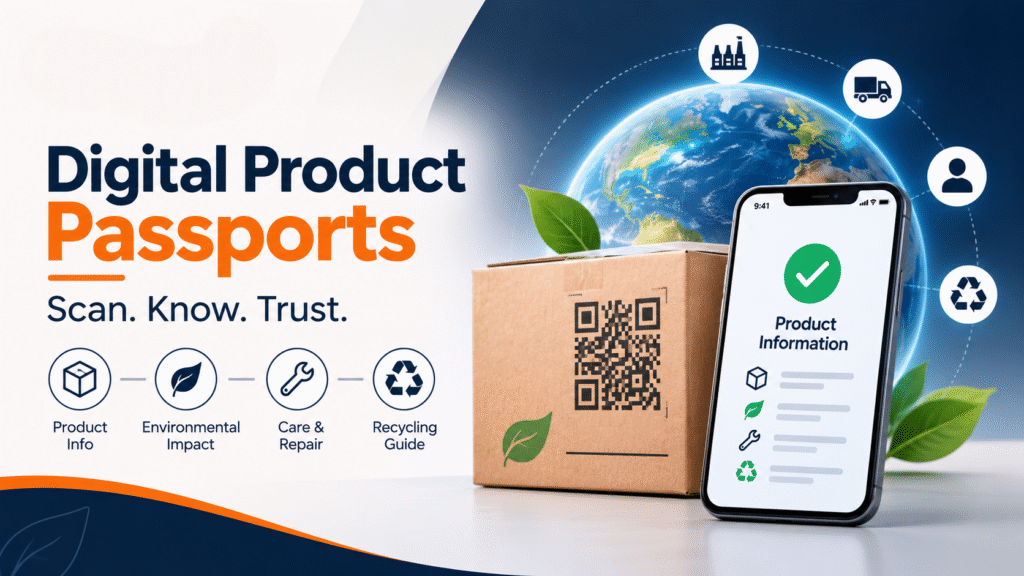
A Digital Product Passport is a digital record that connects a physical product with its relevant digital information. It allows consumers, manufacturers, suppliers, repairers, and recyclers to access product-related information through a digital identifier, such as a QR code. Depending on the product category and applicable regulations, this information may include product composition, manufacturing details, environmental impact, maintenance instructions, and recycling guidance. DPPs help make product information more accessible and support transparency across different stages of a product’s lifecycle.
Why Digital Product Passports Matter in Modern Commerce
Product information is often distributed across different enterprise systems, making it difficult to maintain consistency and transparency. Digital Product Passports help businesses organize relevant product information and make it accessible to authorized stakeholders. They also support product traceability, regulatory compliance, and circular business models by improving access to information about product materials, usage, repair, and recycling. For businesses operating in regulated markets, preparing for DPP requirements is becoming an important part of their digital transformation strategy.
Key Benefits Include
Improved Product Transparency
Provides access to relevant product information.
Better Traceability
Helps connect product information across the supply chain.
Lifecycle Visibility
Supports repair, reuse, refurbishment, and recycling activities.
Data Accessibility
Makes relevant information available to authorized stakeholders.
Regulatory Readiness
Helps businesses prepare for applicable product-specific requirements.
How Composable Commerce Supports Digital Product Passports
Composable Commerce allows businesses to build their digital commerce ecosystem using independent services and specialized applications. Instead of managing every business function within a single platform, organizations can connect product data, inventory, supplier information, and customer-facing experiences through APIs. This modular approach makes it easier to introduce Digital Product Passport capabilities without redesigning the entire commerce infrastructure. Individual services can also be updated as business requirements and regulatory expectations evolve.
For example, a business can use a Product Information Management (PIM) system to manage product attributes, an Enterprise Resource Planning (ERP) system for manufacturing information, and a dedicated DPP service to manage passport records. These systems can exchange information through APIs and integration services. The commerce frontend can then present the appropriate passport information to customers through product pages or other digital touchpoints. This architecture helps businesses maintain connected product information while allowing individual applications to operate independently.
Key Components of a Digital Product Passport Architecture
A DPP implementation requires multiple components to identify products, manage information, and provide controlled access. Each component performs a specific role in maintaining the connection between a physical product and its digital record. In a composable environment, these capabilities can be implemented as separate services and integrated through standardized interfaces. The architecture should also support data accuracy, interoperability, security, and long-term information accessibility.
Component | Purpose |
Product Identifier | Identifies a product model, batch, or individual item |
Data Carrier | Connects the physical product to its digital record using a QR code or another supported carrier |
Product Information System | Manages product attributes, descriptions, and specifications |
DPP Data Repository | Stores or references relevant passport information |
API Layer | Enables secure information exchange between connected systems |
Access Management | Controls who can view or update specific information |
Integration Services | Connects manufacturers, suppliers, and commerce platforms |
Integrating Digital Product Passports with Enterprise Systems
Successful DPP implementation depends on connecting information from multiple enterprise applications. PIM platforms can provide product descriptions and specifications, while ERP systems can supply manufacturing and business information. Product Lifecycle Management (PLM) systems can contribute engineering and material details, while supply chain applications can provide sourcing and traceability information. Integration services bring these different data sources together and make the required information available to the DPP application.
In a composable commerce ecosystem, businesses can connect these applications without creating strong dependencies between them. APIs and integration middleware can help synchronize relevant information, validate incoming data, and distribute updates to the appropriate services. This approach also makes it easier to introduce additional data sources when product requirements change.
Typical Enterprise System Integrations
Connect essential enterprise systems to create a unified product information ecosystem.
PIM
Product attributes, descriptions, and specifications.
Product InformationERP
Manufacturing, production, and enterprise resource information.
Enterprise ResourcesPLM
Product design, materials, and engineering information.
Product LifecycleSupply Chain Systems
Supplier, sourcing, and traceability information.
Supply Chain DataDPP Service
Passport creation, lifecycle management, and information access.
Digital Passport HubCommerce Platform
Customer-facing product passport experiences.
Customer ExperienceRole of APIs and Data Interoperability
APIs play an important role in connecting Digital Product Passport services with composable commerce applications. They enable systems to exchange product information without requiring direct dependencies between individual platforms. For example, a DPP service can retrieve approved product attributes from a PIM platform and make relevant information available through a customer-facing commerce application. Standardized identifiers and common data formats also help different organizations interpret product information consistently.
Interoperability becomes especially important when manufacturers, suppliers, distributors, and retailers use different technology platforms. Businesses should consider API security, data validation, versioning, and standardized data structures when designing these integrations. Standards such as GS1 identifiers and EPCIS can support product identification and supply chain event data exchange. The appropriate standards depend on the product category and applicable regulatory requirements.
Challenges in Implementing Digital Product Passports
Although Digital Product Passports offer several advantages, implementation requires careful planning across technology, data, and business operations. Organizations may need to consolidate information from legacy applications, coordinate with suppliers, and maintain accurate product records. In many cases, product information is incomplete or stored in inconsistent formats across different systems. Businesses must also ensure that sensitive commercial information is not exposed to unauthorized users.
Managing these requirements across multiple applications can become complex without a clear data governance strategy. Organizations should establish responsibilities for collecting, validating, updating, and sharing product information before introducing DPP capabilities into their commerce ecosystem.
Common Implementation
Challenges
Implementing Digital Product Passport solutions requires organizations to address several operational, technical, and regulatory challenges.
Inconsistent Product Information
Inconsistent product information across enterprise systems.
Supplier & Manufacturing Data
Difficulty collecting supplier and manufacturing data.
Legacy System Integration
Integration with existing legacy applications.
Data Security & Privacy
Data security, privacy, and access control.
Passport Record Management
Maintaining accurate and updated passport records.
Platform Interoperability
Ensuring interoperability between different platforms.
Regulatory Compliance
Meeting product-specific regulatory requirements.
Building a Reliable Digital Product Passport Ecosystem
Addressing these challenges supports consistent product information, effective system connectivity, and regulatory alignment.
Best Practices for Building a DPP-Ready Commerce Ecosystem
Businesses should begin by identifying which products and markets fall under applicable Digital Product Passport requirements. They should then map existing product data sources and identify missing information across their enterprise applications. A modular architecture can help separate passport management, product data management, integration, and customer-facing experiences. Organizations should also establish clear ownership, validation processes, and access policies to maintain reliable passport information.
Rather than implementing every capability at once, businesses can begin with a specific product category or product group and expand gradually. This approach allows teams to validate data quality, test system integrations, and identify operational challenges before scaling the implementation across the organization.
A Practical Implementation Strategy
A structured approach to implementing Digital Product Passports, from identifying requirements to maintaining product lifecycle records.
Identify Requirements
Understand applicable regulations and product-specific data requirements.
Establish Identifiers
Use appropriate product identifiers to connect physical products with digital records.
Map Data Sources
Identify product information across PIM, ERP, PLM, and supply chain systems.
Design Integrations
Define secure APIs and information exchange processes.
Implement Governance
Establish data ownership, validation, and access control.
Test Accessibility
Verify that passport information is accurate and accessible to the intended stakeholders.
Maintain Records
Support updates throughout the product lifecycle.
From Planning to Lifecycle Management
Follow a structured implementation process to support reliable product information and accessible Digital Product Passports.
Future of Digital Product Passports in Composable Commerce
Digital Product Passports are expected to become increasingly important as product transparency and circular economy initiatives develop across industries. Businesses will need to connect information from manufacturers, suppliers, distributors, and digital commerce platforms. This will increase the importance of interoperable systems and reliable product data management. Composable Commerce can support this evolution by allowing organizations to introduce new capabilities without replacing their entire technology ecosystem.
As product-specific standards and regulatory requirements mature, businesses may also explore advanced capabilities such as automated product data collection, lifecycle tracking, and integration with supply chain information networks. Flexible and interoperable architectures will help organizations adapt to these developments while maintaining consistent product information across digital channels.
Conclusion
Digital Product Passports represent an important step toward more transparent and traceable digital commerce ecosystems. Composable Commerce provides a flexible foundation for connecting product information, enterprise applications, and customer-facing services. By combining standardized product identifiers, secure APIs, and effective data governance, businesses can prepare their commerce platforms for evolving DPP requirements. Building this capability can help organizations improve product transparency, strengthen supply chain visibility, and support more sustainable business practices.